

Gestão de Risco Financeiro: Estratégias Essenciais
💼 Aprenda estratégias eficazes para gestão de risco financeiro, protegendo seus recursos e otimizando investimentos em cenários econômicos incertos.
Editado por
Patrícia Gomes
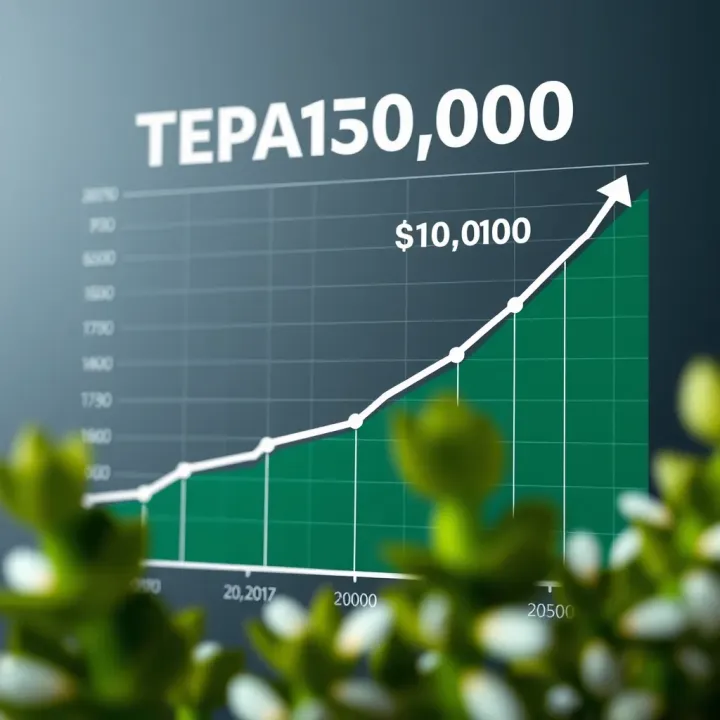
Investing $100,000 in Brazil’s Tesouro Direto means you're putting your money into government bonds that come with different terms and returns. Over 10 years, how much your money grows depends on the bonds you choose, inflation rates, and interest changes.
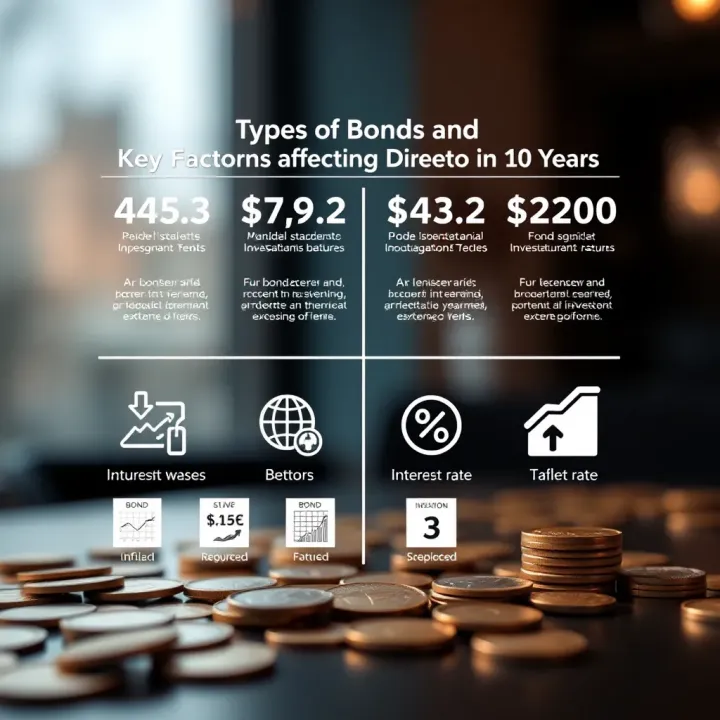
Tesouro Direto offers several main types of bonds:
Tesouro Prefixado: Fixed rate bonds, where the return is set at purchase. You know exactly how much you'll get if held to maturity.
Tesouro Selic: Bonds tied to the Selic rate, Brazil’s benchmark interest rate. Returns vary as Selic changes.
Tesouro IPCA+ (NTN-B): Bonds indexed to inflation (measured by IPCA) plus a fixed interest rate, protecting your investment from inflation.
Here’s an example with $100,000 invested in each bond type for 10 years:
| Bond Type | Average Annual Return | Estimated Value After 10 Years | | --- | --- | --- | | Tesouro Prefixado | 8.5% | ~$225,000 | | Tesouro Selic | 6.5% (variable) | ~$190,000 | | Tesouro IPCA+ | 4.5% + 3.5% CPI | ~$245,000 |
Note: Figures are illustrative, actual results will depend on market conditions.
Remember, Tesouro IPCA+ helps your money keep pace with inflation, which has averaged around 3.5% in recent years. This means your purchasing power won’t erode over time.
Market fluctuations: Interest rates can shift and impact bond prices, especially if you sell before maturity.
Inflation risk: Tesouro Prefixado yields may lose value in real terms if inflation spikes unexpectedly.
Taxation: Returns are subject to income tax, with rates decreasing from 22.5% to 15% based on holding period.
If you want to maximize your returns, consider diversifying across bond types to balance risk and inflation protection. Also, reinvest interest payments rather than cashing them out to benefit from compound growth.
In brief, your $100,000 can realistically more than double in Tesouro Direto over a decade, depending on choices and market trends. Stay informed about interest rates and inflation, and plan your strategy accordingly.
Before diving into how $100,000 grows in Brazil’s Tesouro Direto over 10 years, it’s key to understand what Tesouro Direto is and how it functions. Tesouro Direto offers a way for individual investors to buy government bonds online, making Brazil's public debt accessible in smaller portions. If you know the nuts and bolts, you’ll better grasp the risks and rewards involved.
Tesouro Direto launched in 2002 as a program by Brazil's Treasury Department to let retail investors buy government bonds directly over the internet. Before this, government bonds were mostly sold to banks and large institutions. This system democratized access, letting regular folks with as little as a few hundred reais invest in Brazil’s debt.
Since then, Tesouro Direto’s role has expanded, becoming a popular choice for medium- and long-term saving goals like retirement or education funding. What makes it practical is its low minimum investment, transparency, and the backing of the Brazilian government, which lowers default risk.
Individual investors participate via online platforms offered by brokers and banks, which act as intermediaries. These platforms provide easy access to buy, sell, and monitor bonds, usually with low or no initial fees. Setting up an account is straightforward, requiring basic documentation and a bank account, making Tesouro Direto accessible even if you’re new to fixed income.
Tesouro Direto offers three main bond types, each suited for different market conditions and investor needs.
Fixed-rate bonds: These bonds offer a set annual interest rate, meaning you know exactly how much your money will grow if you hold the bond until maturity. For example, if you buy a bond paying 7% fixed interest, your $100,000 investment grows steadily, unaffected by inflation changes. These are great if you want predictability and protection against interest rate volatility.
Inflation-linked bonds: Also called Tesouro IPCA+, these adjust their principal and interest payments based on Brazil’s inflation index (IPCA). They provide a real return above inflation, shielding your purchasing power over time. Say inflation is 4% annually; if the bond offers 3% plus IPCA, your investment essentially earns 7%, protecting you from losing ground to rising prices.
Floating-rate bonds: These bonds pay interest tied to the Selic rate, Brazil’s benchmark interest rate. The payments fluctuate as the Selic moves, which can be beneficial if interest rates rise but carry the risk of lower returns if rates fall. They're often chosen when investors expect rising rates or want to hedge other fixed-income holdings.
Understanding these bond types helps you tailor your investment according to your risk tolerance, inflation expectations, and income needs over the next decade.
In the next sections, we’ll show how each bond type can impact your $100,000 investment growth over 10 years, factoring in rate changes, inflation, fees, and taxes.
Investing $100,000 in Tesouro Direto over a decade offers a clear path to understanding how different bond types work and what returns you might expect. This section breaks down growth patterns for fixed-rate, inflation-linked, and floating-rate bonds, giving you concrete numbers to consider as you shape your portfolio. Knowing these specifics helps investors plan realistically, balancing steady income against inflation risks.
Fixed-rate bonds offer a predictable return by locking in an interest rate when you buy. For example, if a bond yields 6% annually compounded, your $100,000 could grow to about $179,000 after 10 years. Compounding interest means your earnings build on previous gains, steadily increasing the total over time. This makes fixed-rate bonds attractive for investors who prefer stability and clear expectations.
However, one downside is that fixed rates don’t adjust for inflation. So, if inflation runs higher than your rate, your purchasing power shrinks even though your investment grows nominally. Still, fixed-rate bonds can be a solid core in your portfolio, especially during periods of stable or low inflation.
Inflation-linked bonds adjust their principal and interest payments based on inflation figures, usually the IPCA index in Brazil. This adjustment protects your investment’s real value. For instance, if inflation averages 4% yearly and the bond pays a 2% fixed rate above inflation, your effective return would hover around 6% annually in real terms.
Understanding real versus nominal returns is key. Nominal returns are your total earnings without accounting for inflation, while real returns show purchasing power growth. Inflation-linked bonds focus on real returns, so your $100,000 investment maintains value against rising prices even if nominal amounts fluctuate. This feature is particularly valuable during periods of unexpected inflation hikes.
Floating-rate bonds feature interest rates that reset periodically, often tied to benchmarks like the CDI rate in Brazil. This means your yield adjusts with economic conditions. If rates rise, your returns climb; if they fall, your earnings shrink. Over ten years, this can result in more volatile growth, but it also offers protection against declining interest environments.
To illustrate, if the CDI rate grows from 5% to 8% over the decade, your bond’s yield will follow, potentially pushing your $100,000 investment significantly higher than fixed-rate returns. But if rates drop or remain low, growth may be slower. Floating-rate bonds suit investors who accept some variability in exchange for some inflation and rate protection.
When planning your 10-year investment in Tesouro Direto, weigh the trade-offs between secure fixed returns, inflation protection, and rate sensitivity. Your choice shapes not just how much $100,000 grows but also how well your savings keep up with Brazil's economic shifts.
This clear look at growth patterns arms you with practical insights, helping you make informed bond selections that align with your risk tolerance and financial goals.
When you invest in Tesouro Direto, your returns don't just happen in a vacuum. Several key factors influence how your $100,000 grows over a decade. These include shifts in interest rates, Brazil's broader economic climate, and inflation trends. Understanding these can help you avoid surprises and plan smarter. For instance, sudden changes in the central bank’s policies or spikes in inflation can significantly impact your bond yields.
Brazil's economic environment plays a direct role in the yields offered by Tesouro Direto. When the economy is strong, the government may lower interest rates to encourage borrowing and spending, which tends to drag bond yields down. Conversely, during economic slowdowns or uncertainty, rates often climb as the government tries to attract investors, which can push bond yields higher. For example, if Brazil's GDP growth slows unexpectedly, you might see Tesouro Direto yields rise, which affects your investment’s market value.
Central bank policies are the beat that guides these interest rate changes. The Banco Central do Brasil uses tools like setting the Selic rate—the benchmark interest rate—to control inflation and stabilize the economy. When inflation heats up, the central bank may raise the Selic rate, making new bonds more attractive but lowering the price of existing bonds. For a 10-year investor, this means that timing purchases and understanding policy signals matter. If the central bank signals impending rate hikes, locking in fixed-rate bonds earlier could be a wiser move.
Inflation in Brazil has been quite a rollercoaster in the past decade, sometimes hitting double digits during global or domestic shocks. This volatility eats into the real value of your returns if you hold fixed-rate bonds that don’t adjust for inflation. For example, even if a bond promises a 6% return, a 7% inflation rate means your purchasing power actually declines.
That’s where inflation-protected bonds come in, like Tesouro IPCA+. These bonds adjust their principal and interest payments based on the official inflation index (IPCA), shielding your investment’s real value from inflation swings. Choosing those can be a smart hedge, especially if inflation is expected to rise or remain unstable. Investors who held Tesouro IPCA+ during Brazil’s inflation spikes over the last decade ended up preserving their real returns better than those holding fixed-rate bonds.
Knowing how inflation and interest rates interact helps you pick bonds that fit your risk tolerance and financial goals. It’s not just about chasing the highest number but protecting what you’ve invested against economic ups and downs.
In summary, keeping an eye on Brazil’s economic climate and central bank actions—and understanding inflation trends—gives you practical tools to navigate Tesouro Direto investments wisely over ten years. These factors directly affect how much your original $100,000 grows, so they deserve close attention in your investment planning.
When investing $100,000 in Brazil’s Tesouro Direto, understanding tax rules and fees is vital. Taxes can chip away at your returns, while fees add an extra cost layer. Knowing how both work helps you plan smarter and keep more of your gains.
Brazil taxes earnings from Tesouro Direto under the income tax regime for investments. This means profits from selling bonds or receiving interest get taxed as income. The tax applies regardless of whether you sell early or hold until maturity, making it essential to factor in taxes when projecting your net return.
The tax rates decrease based on how long you hold the investment. For bonds held up to 180 days, the tax rate is 22.5%. Between 181 and 360 days, it drops to 20%. Holding for 361 to 720 days lowers it further to 17.5%, and beyond 720 days, the rate settles at 15%. For instance, if you sell a bond after 10 years, you'd pay a 15% tax on the profits, reducing your overall net gains. Long-term investors tend to benefit from lower taxes, making patience a profitable strategy.
Brokerage fees in Tesouro Direto are generally low or sometimes waived, depending on your platform. Popular brokers like XP Investimentos or Clear typically offer competitive rates or free transactions for Tesouro Direto. Still, it's smart to check their schedules because fees vary and could affect smaller trades more significantly. For example, a $10 fee on a $1,000 bond purchase is more impactful than on a $100,000 investment.
Custodian fees are another cost to consider. The Central Bank of Brazil or the National Treasury charges minimal custody fees for holding your bonds, usually around 0.25% annually. While this sounds low, over 10 years, it can add up and eat into your returns. Think of it like a small annual toll for keeping your investment safe and accessible. Avoid ignoring this cost in your calculations because it directly reduces what you ultimately take home.
Keeping tabs on taxes and fees isn’t glamorous, but it’s where many investors lose money quietly. Understand each charge and its timing to shield your gains and avoid surprises.
By factoring in Brazil's tax rules and the associated fees, you can better estimate what your $100,000 investment truly earns over a decade in Tesouro Direto.
Making the most of a $100,000 investment in Tesouro Direto over 10 years means more than just picking any bond. Your choices around the types of bonds, when to buy or sell, and how to reinvest can greatly impact your final returns. Understanding these practical tips can help investors navigate fluctuations in Brazil's economy and inflation, ensuring you don't leave potential gains on the table.
Balancing risk and return is a fundamental step. If you're aiming for stable income with predictable results, fixed-rate bonds are your go-to. They're less volatile but might deliver lower yields when inflation spikes. On the flip side, inflation-linked bonds provide protection if prices rise unexpectedly, but their returns may lag in stable or deflationary periods. For example, if inflation runs at 6% yearly but a fixed bond pays only 5%, your real returns actually shrink. So, it's about matching your comfort level with risk and how much return you hope for.
Matching bonds to inflation expectations calls for a bit of economic insight. Brazil’s inflation can be jumpy, so if you expect higher inflation over the next decade, inflation-linked bonds might shield your buying power better. These bonds adjust your principal according to the IPCA (Brazil’s official inflation index), ensuring your investment's value keeps pace. But if you predict inflation will stay low or moderate, fixed-rate options may provide solid returns without surprises. Staying informed about inflation trends and central bank signals can guide this choice.
Timing strategies do matter, especially when interest rates swing. Buying bonds right before a rate hike can lock in lower returns, while purchases after a rate increase might lock in higher yields. While trying to time the market perfectly is risky, watching Brazil’s Central Bank announcements and economic indicators helps. For instance, if the Banco Central hints at lowering rates due to slow growth, locking in fixed-rate bonds beforehand could be smart.
Reinvestment and compounding advantages are your best friends over a decade. Reinvesting interest payments or coupons can grow your principal, launching a compounding effect that a single lump-sum investment lacks. For example, reinvesting payments from fixed-rate bonds into another bond or TESOURO IPCA (inflation-indexed) adds layers to your total growth. This approach also cushions your portfolio during down periods where fresh capital deployed can capitalize on higher yields.
Bottom line: Align your bond choices with your goals and keep an eye on economic signals. Reinvesting earnings along the way lets your money grow faster than just sitting tight.
Taking the time to plan your bond selection and being flexible with buying or selling keeps you ahead in Brazil’s often unpredictable market. It’s not about perfect timing but smart, informed moves that add up over time.
💼 Aprenda estratégias eficazes para gestão de risco financeiro, protegendo seus recursos e otimizando investimentos em cenários econômicos incertos.

📈 Descubra como escolher o melhor curso de opções binárias, com dicas práticas e estratégias para iniciantes e avançados que buscam resultados reais.

💹 Entenda opções binárias com dicas para investir com segurança e descubra onde baixar wallpapers temáticos exclusivos para personalizar seu dispositivo. 🎨
📉 Aprenda a analisar o mercado financeiro pelo price action: estratégias, técnicas e suas aplicações práticas para investir com mais confiança. 💡
Baseado em 12 avaliações